.png)
Ehlers-Danlos Syndrome and Hip Hypermobility: What Your Diagnosis May Mean for Your Hips


Receiving an Ehlers-Danlos syndrome (EDS) diagnosis can bring up a lot of questions—particularly if you have spent years dealing with unexplained joint pain, unusual flexibility, repeated injuries, clicking joints or a feeling that your hip is unstable.
For some patients, understanding the relationship between Ehlers-Danlos syndrome and hip hypermobility can provide important context for symptoms that may previously have seemed unrelated.
Being flexible isn't necessarily a problem. But when excessive joint movement is accompanied by pain, instability or injury, the hip may need a closer look.
This is particularly important because hip symptoms in people with hypermobility can involve more than one structure. The labrum, joint capsule, muscles and underlying shape of the hip can all influence stability.
What Is Ehlers-Danlos Syndrome?
Ehlers-Danlos syndromes are a group of inherited connective tissue disorders. Connective tissue helps provide structure and support throughout the body, including within the skin, ligaments, tendons, blood vessels and joints.
There are multiple types of EDS, and symptoms can vary considerably from one person to another.
Hypermobile Ehlers-Danlos syndrome (hEDS) is particularly associated with generalized joint hypermobility. A person may have joints that move beyond the range expected for most people, along with symptoms such as joint pain or instability.
It is important to distinguish between being naturally flexible and having a connective tissue disorder. Hypermobility alone does not mean someone has Ehlers-Danlos syndrome.
An EDS diagnosis requires an appropriate medical evaluation based on the individual's history, examination and applicable diagnostic criteria.
How Are Ehlers-Danlos Syndrome and Hip Hypermobility Connected?
The hip is normally a very stable ball-and-socket joint. Stability comes from several structures working together, including the bony shape of the hip, the labrum, ligaments, joint capsule and surrounding muscles.
In a hypermobile hip, the soft tissues responsible for helping stabilize the joint may allow greater-than-normal movement.
That doesn't automatically cause pain.
Problems can develop, however, when excessive movement allows the femoral head—the "ball" of the hip—to move abnormally within the acetabulum, or hip socket. Repetitive abnormal movement may place additional stress on the labrum, capsule and surrounding tissues.
For some patients, this subtle instability is referred to as hip microinstability.
Signs That Hip Hypermobility May Be Causing a Problem
People with hypermobility don't necessarily experience hip problems in the same way. Symptoms may also overlap with other hip conditions, making an accurate diagnosis particularly important.
Potential symptoms include:
Deep pain in the hip or groin
A sensation that the hip is slipping, shifting or giving way
Clicking, catching or popping accompanied by pain
Pain after prolonged standing or walking
Discomfort with twisting or pivoting
Pain during or after exercise
Recurrent hip or groin injuries
A feeling of instability at the extremes of hip motion
Muscle fatigue around the hip, pelvis or lower back
Some patients may also have a labral tear, which can occur when the labrum—the ring of fibrocartilage around the hip socket—is repeatedly stressed or injured.
The presence of these symptoms doesn't prove that hypermobility is the cause. Several hip disorders can produce similar complaints, which is why a detailed evaluation matters.
Why Hip Microinstability Can Be Difficult to Diagnose
One challenge with hip microinstability is that it may not be obvious on a standard X-ray.
A hip can look relatively normal on basic imaging while still experiencing abnormal movement or soft-tissue instability.
Diagnosis may therefore involve several pieces of information rather than a single test.
Medical History and Physical Examination
Your specialist may ask about generalized hypermobility, previous joint injuries, dislocations or subluxations, family history and activities that trigger your symptoms.
The physical examination may include maneuvers designed to evaluate hip stability and determine whether certain positions reproduce your symptoms.
Imaging
X-rays can help evaluate the underlying shape and alignment of the hip.
MRI or MR arthrography may be used in certain circumstances to evaluate structures such as the labrum, cartilage and joint capsule.
Your physician may also evaluate whether another structural condition is contributing to instability.
The Connection Between Hip Dysplasia and Hypermobility
This is an especially important distinction for patients with Ehlers-Danlos syndrome and hip hypermobility.
Not all hip instability is caused solely by loose connective tissue.
Some patients also have hip dysplasia, in which the acetabulum doesn't provide adequate coverage of the femoral head. In that situation, the underlying bone structure itself contributes to instability.
A patient who has both structural undercoverage and soft-tissue laxity may require a very different treatment strategy than someone whose instability primarily involves the capsule.
That is one reason determining why the hip is unstable is so important before deciding how to treat it.
Can Ehlers-Danlos-Related Hip Pain Be Treated Without Surgery?
Often, conservative treatment is an important first step.
Treatment should be individualized because a strategy appropriate for a typical sports injury may not necessarily be appropriate for a hypermobile patient.
Physical Therapy and Strengthening
Physical therapy may focus on improving muscular control around the hip rather than simply increasing flexibility.
Strengthening the gluteal muscles, core and other stabilizing muscle groups can help the body dynamically support the joint.
For someone who is already hypermobile, more stretching isn't necessarily better. Excessive stretching into end-range positions may aggravate symptoms in some patients.
A physical therapist familiar with hypermobility can help establish appropriate limits and develop exercises that emphasize control and stability.
Activity Modification
Patients may need to temporarily modify movements that repeatedly provoke instability or pain.
The goal isn't necessarily to stop being active. Instead, it is to identify movements that overload the symptomatic hip and gradually build the strength and control required for activity.
Symptom Management
Depending on the individual, a physician may recommend additional nonsurgical strategies to help manage symptoms while rehabilitation progresses.
The appropriate treatment plan should be determined with your healthcare team, particularly when EDS or another connective tissue disorder is involved.
When Is Surgery Considered for Hip Hypermobility?
Surgery is not automatically recommended simply because someone has EDS or generalized hypermobility.
It may be considered when significant symptoms persist despite appropriate nonsurgical treatment and a specialist identifies a specific structural or soft-tissue problem that can be addressed surgically.
The operation depends on the source of instability.
Hip Arthroscopy and Capsular Plication
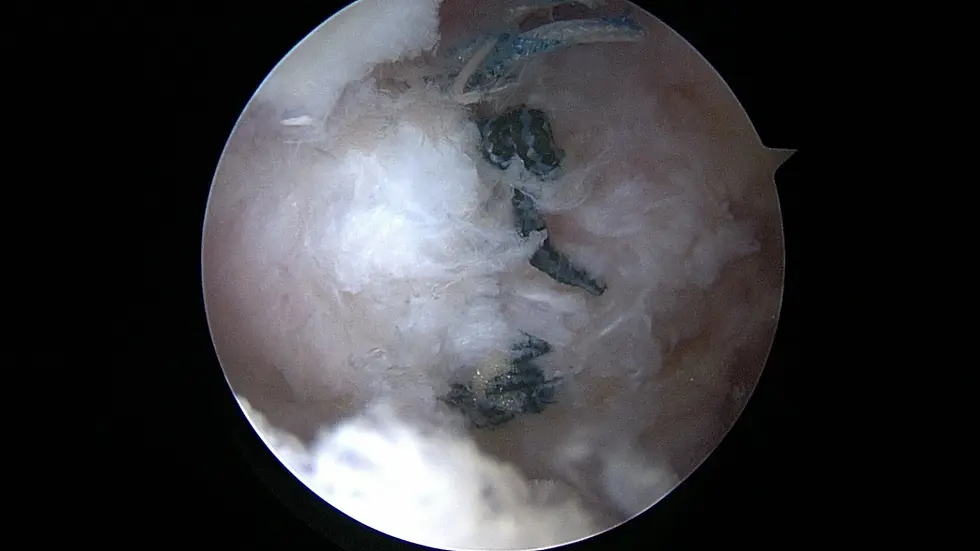
If instability is associated with excessive capsular laxity, a surgeon may consider capsular plication during hip arthroscopy.
Capsular plication involves tightening the hip capsule with sutures to reduce excessive movement and improve stability.
If a labral tear is also present, the labrum may be repaired during the same arthroscopic procedure when appropriate.
PAO for Structural Instability
When instability is primarily related to significant acetabular dysplasia, tightening the soft tissues alone may not correct the underlying problem.
A periacetabular osteotomy (PAO) changes the orientation of the acetabulum to improve coverage of the femoral head.
For carefully selected patients, treating the underlying bony anatomy can be an important part of restoring hip stability.
Why an Ehlers-Danlos Diagnosis Matters Before Hip Surgery
If you've been diagnosed with Ehlers-Danlos syndrome or significant generalized hypermobility, make sure your hip surgeon knows.
Connective tissue characteristics can affect surgical planning, rehabilitation and the way stability is evaluated.
Equally important, treatment should address the actual source of the instability rather than assuming that every painful hypermobile hip requires the same solution.
Questions worth discussing with a hip preservation specialist include:
Is my hip actually unstable?
Do I have a labral tear?
Is my hip capsule unusually lax?
Do I have hip dysplasia or another structural abnormality?
Is physical therapy appropriate before considering surgery?
If arthroscopy is recommended, how will the capsule be managed?
Could the underlying bone structure also need to be addressed?
How might my hypermobility affect rehabilitation?
When Should You See a Hip Preservation Specialist?
Consider an evaluation if hypermobility is accompanied by persistent hip or groin pain, painful clicking or catching, repeated injuries, or a sensation that the hip is shifting or giving way.
You may also benefit from a hip-specific evaluation if you've already been diagnosed with EDS but your hip symptoms have continued despite physical therapy or other conservative treatment.
The objective isn't simply to determine whether you're flexible. It's to determine whether excessive movement is contributing to your symptoms, why the hip is unstable, and which structures are involved.
Final Thoughts on Ehlers-Danlos Syndrome and Hip Hypermobility
An Ehlers-Danlos diagnosis can provide important context for patients who have experienced years of joint symptoms, but it doesn't mean hip pain or surgery is inevitable.
Many people with hypermobility can manage their symptoms through appropriately designed strengthening, activity modification and other conservative strategies.
For patients with persistent symptoms, identifying whether the problem involves microinstability, labral injury, capsular laxity, hip dysplasia or a combination of factors is critical.
Understanding the connection between Ehlers-Danlos syndrome and hip hypermobility can help you ask more specific questions, seek appropriate care and make better-informed decisions about preserving your hip.


Comments